From Systems Thinking to Ecosystemic Mindset
We talk a great deal about systems thinking in leadership, but far less about what it actually means to think and act ecosystemically.
Humans are not separate from nature, nor are we above it. We are participants within it - one species among many, embedded in and dependent on the health of the whole.
And we are not the only species capable of acting in ways that sustain that whole.
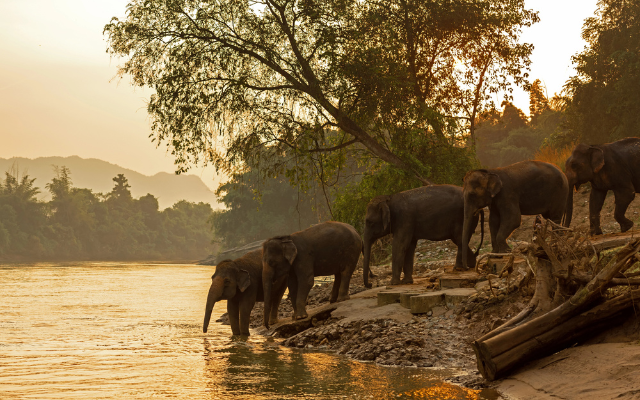
Elephants, ants, beavers, bees - all organise collectively in ways that maintain and regenerate their environments. They act, in different ways, with what we might call an ecosystemic intelligence: behaviour that serves both the individual and the wider system.
By contrast, much of what currently passes for leadership - and indeed for economic success - is rooted in extraction: short-term gain, resource depletion, the pursuit of power without regard for consequence.
This is often treated as inevitable. It is not.
It is the product of particular cultural patterns - dominator models that prioritise control, hierarchy and accumulation over relationship, reciprocity and care.
There is, however, a growing and healthy backlash. A recognition that this way of operating is not only damaging but unsustainable - and that as human beings we are, at our best, profoundly pro-social. Our survival has always depended on our capacity to think and act in relation to the whole.
Developing an ecosystemic mindset is not about idealism or retreating from the realities of organisational life. It is about learning how to work more intelligently within the systems we are part of - with all their complexity, tensions and constraints.
That is not straightforward work. It requires different ways of seeing, different values in action, and a willingness to engage with both the possibilities and the difficulties of change.
This is one of the core threads running through the Spirit at Work programme: how to develop the thinking, awareness and practice needed to operate in ways that are more aligned with the systems we depend on - and the future we are collectively shaping.